deepakupadhyaya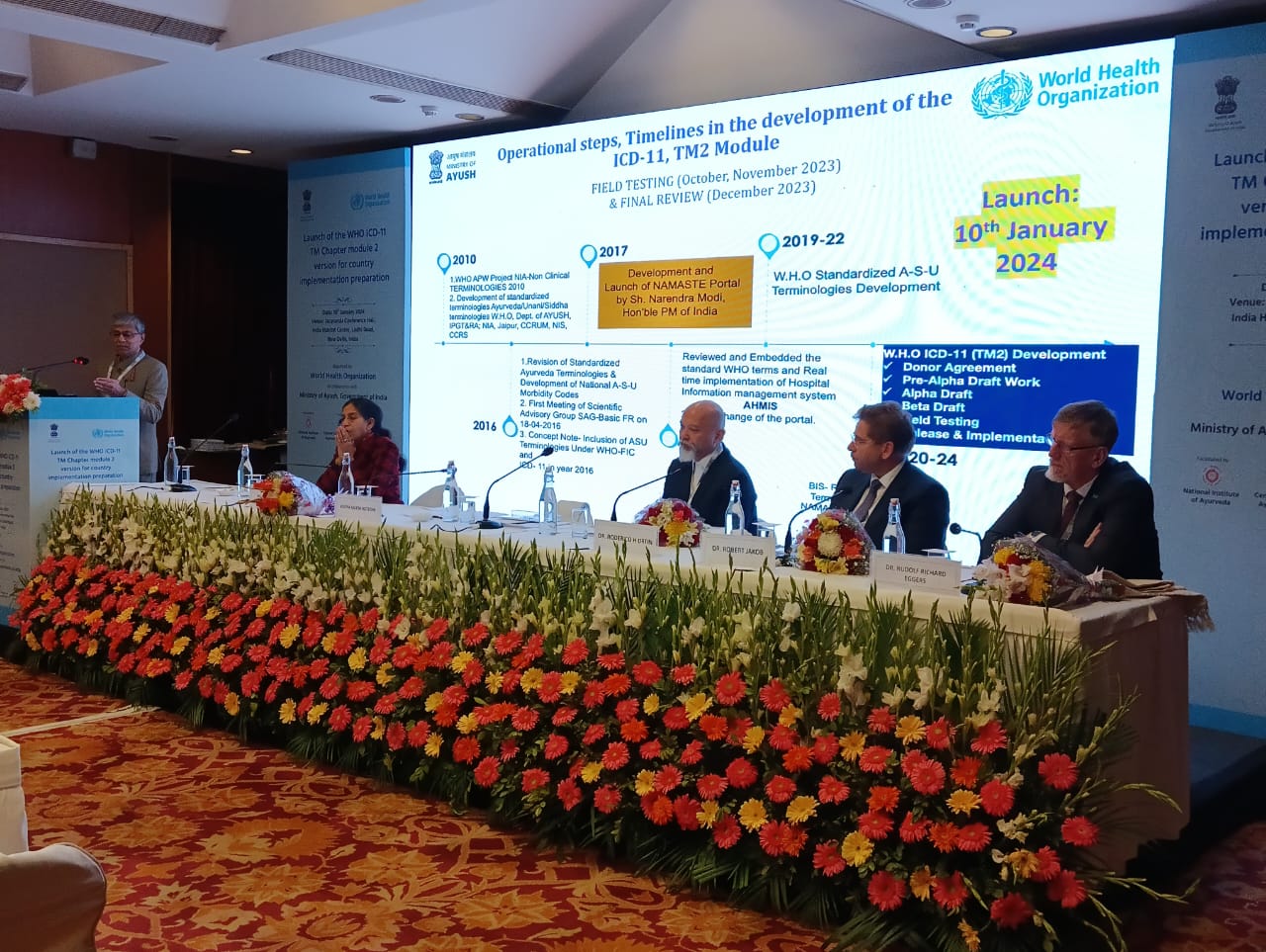
Today is a big day for Ayurveda, Unani and Siddha systems of medicine. Now ICD11 codes will be available for these three medical systems, which means there will be uniformity in the medicines and diseases of these three medical systems in the world. This code is issued by the World Health Organization.
The data and terminology relating to diseases based on Ayurveda, Siddha, and Unani systems will now be included in the ICD11 classification of WHO. This effort will lead to global uniformity in ASU (Ayurveda, Unani, and Siddha) medicine as a code of vocabulary defining diseases. The World Health Organization (WHO) has developed a classification series called International Classification of Diseases (ICDs) to classify diseases internationally. The global data on diseases currently available is mainly based on healthcare practices to be diagnosed through modern biomedicine. The classification of data and terminology relating to diseases based on Ayush systems such as Ayurveda, Siddha, Unani etc. is not yet included in the WHO ICD series.
Director, Integrated Health Services, WHO Geneva was present at the premises of Ministry of Ayush today (9th January). Secretary, Ministry of Ayush along with all senior officials and members deliberated on the efforts of Ministry of Ayush and importance of inclusion of Traditional Medicine in ICD 11. Pradeep Dua, Technical Officer Tradition, Complementary and Integrative Medicine, Integrated Health Services, WHO also participated in the discussion.
Central Bureau of Health Intelligence (CBHI) is an agency under the Ministry of Health and Family Welfare that serves as the WHO Collaboration Center for ICD-related activities. It facilitates the collection and dissemination of data on various diseases and mortality. The Ministry of Ayush has already developed the Code for Ayurveda, Siddha, and Unani Medicine through the National Ayush Morbidity and Standardized Electronic Portal (NAMSTE). The Ministry of Ayush in collaboration with WHO has prepared a categorization of data and terminology related to diseases based on Ayush – Ayurveda, Siddha, and Unani systems under TM2 module of ICD11 series. The Ministry of AYUSH has also signed a Donor Agreement with the World Health Organization for the same.

 एसk
एसk
 kartik Upadhyaya