deepakupadhyaya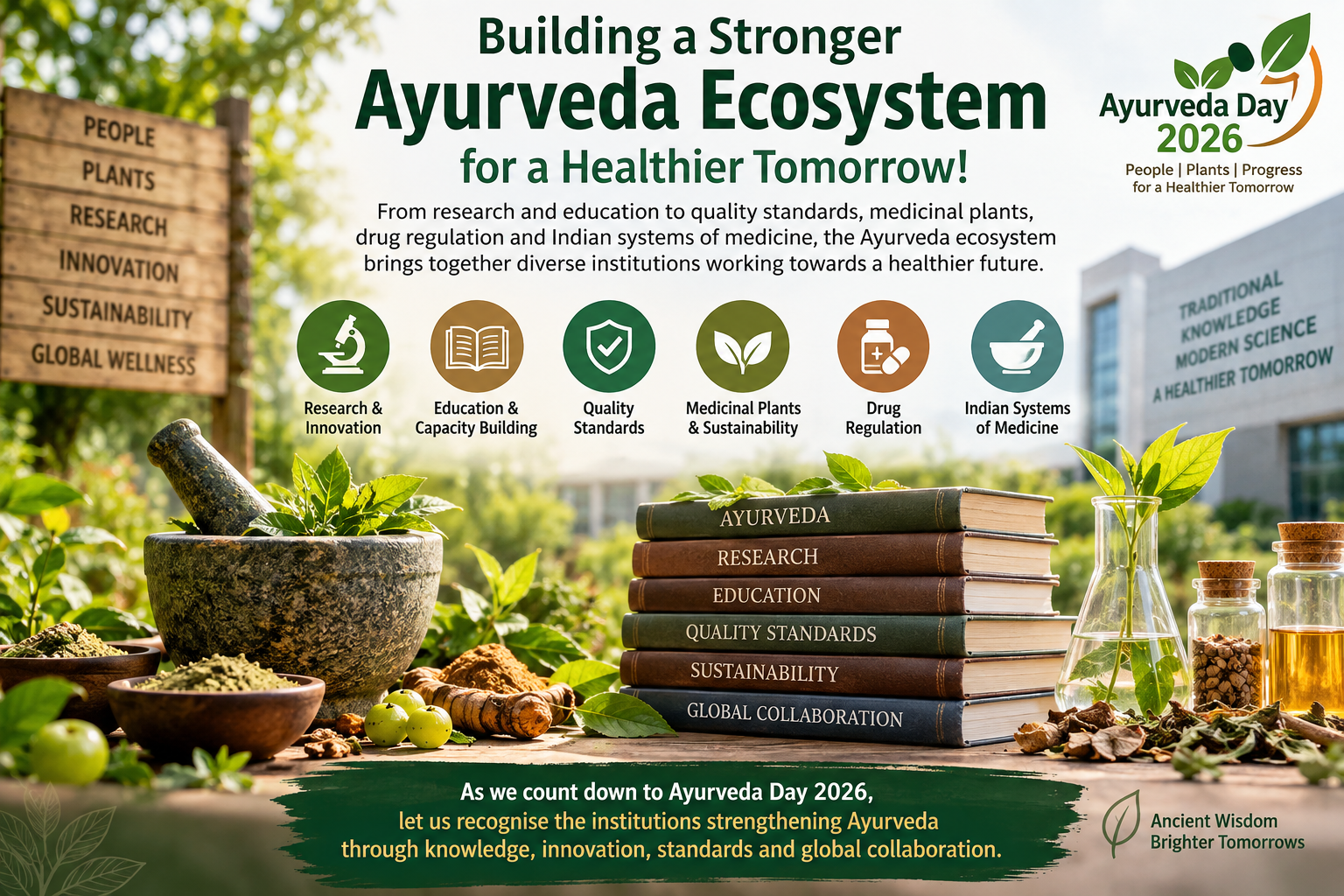
From ancient knowledge to modern research, India’s Ayurveda ecosystem is evolving through stronger institutions, scientific research, quality standards, education, medicinal-plant conservation and global collaboration. As Ayurveda Day 2026 approaches, discover how these pillars are shaping the future of Ayurveda in India and across the world.
New Delhi: As India counts down to Ayurveda Day 2026, the focus is increasingly turning towards the institutions and organisations that are strengthening the country’s Ayurveda ecosystem through research, education, quality standards, medicinal plant conservation, drug regulation and global collaboration.
Ayurveda is no longer viewed only through the lens of traditional healthcare practices. A growing institutional framework is working to strengthen its scientific foundation, improve quality and standards, expand education and research, and take India’s traditional systems of medicine to a global audience.
From research institutions and universities to regulatory bodies, medicinal plant organisations and organisations working on Indian systems of medicine, the Ayurveda ecosystem brings together multiple stakeholders with a common objective: building a stronger and more credible traditional medicine system for the future.
Research at the Heart of Ayurveda’s Growth
Research is one of the key pillars of the modern Ayurveda ecosystem.
Institutions working in Ayurveda research are focusing on areas such as medicinal plants, traditional formulations, clinical research, pharmacology, drug development and evidence-based validation of Ayurvedic practices.
The integration of traditional knowledge with modern scientific research can help generate stronger evidence for Ayurveda while preserving its traditional foundations.
Research is also becoming important in identifying new applications for medicinal plants and Ayurvedic formulations, potentially opening new opportunities in healthcare, pharmaceuticals and wellness.
Strengthening Ayurveda Education
Education is another critical component of the Ayurveda ecosystem.
Universities, colleges and specialised institutions are training the next generation of Ayurveda physicians, researchers, teachers and professionals. Strengthening curriculum, research capabilities and academic infrastructure can help create a skilled workforce capable of taking Ayurveda forward in India and internationally.
The growing emphasis on interdisciplinary research is also creating opportunities for Ayurveda to interact with areas such as biotechnology, pharmacology, nutrition and modern healthcare sciences.
Quality Standards for Ayurvedic Medicines
Quality assurance is essential for the long-term growth and credibility of Ayurveda.
Standardisation of raw materials, manufacturing processes and finished formulations can help ensure consistency, safety and quality across Ayurvedic medicines.
Institutions working on pharmacopoeial standards, testing methodologies and quality control play an important role in creating confidence among consumers, healthcare professionals and international markets.
As Ayurveda gains visibility outside India, internationally compatible quality standards are expected to become increasingly important.
Medicinal Plants: The Foundation of Ayurveda
Medicinal plants form the backbone of Ayurveda.
India has a rich tradition of using plants and natural resources for healthcare, but growing demand also makes conservation, sustainable cultivation and scientific documentation increasingly important.
The medicinal-plant ecosystem connects Ayurveda with farmers, cultivators, researchers, pharmaceutical companies and conservation organisations.
Developing sustainable supply chains for medicinal plants can simultaneously support Ayurvedic medicine manufacturing, biodiversity conservation and rural livelihoods.
Regulation and Safety
A strong regulatory framework is essential for building trust in Indian systems of medicine.
Regulation covers areas such as manufacturing standards, quality control, licensing and safety requirements for Ayurvedic medicines.
Effective regulation can help protect consumers while supporting responsible innovation within the traditional medicine sector.
As India’s Ayurveda industry expands, regulatory institutions will also play an important role in ensuring that growth is accompanied by appropriate standards and accountability.
Ayurveda and Indian Systems of Medicine
Ayurveda is part of India’s broader Indian Systems of Medicine (ISM) ecosystem, which includes traditional healthcare systems that have evolved over centuries.
Institutional support for Ayurveda and other Indian systems of medicine is helping create a structured framework covering education, research, healthcare delivery, regulation and pharmaceutical development.
This institutional ecosystem is important not only for preserving traditional knowledge but also for adapting it to contemporary healthcare requirements.
Taking Ayurveda to the World
Global interest in Ayurveda has increased significantly, creating new opportunities as well as new responsibilities for India.
International collaboration in research, education, standards and regulation can help improve understanding and acceptance of Ayurveda in global markets.
India’s institutions therefore have an important role in ensuring that the internationalisation of Ayurveda is supported by scientific research, quality standards, professional education and responsible regulation.
Global collaboration can also provide opportunities for researchers and institutions to exchange knowledge and develop common approaches to traditional medicine.
Ayurveda Day 2026: Looking Towards the Future
As Ayurveda Day 2026 approaches, the focus on the institutions supporting the Ayurveda ecosystem highlights an important reality: the future of Ayurveda depends not only on its rich traditional knowledge but also on the strength of the institutions working to preserve, research, regulate and develop it.
Research, education, medicinal plants, quality standards, drug regulation and international cooperation are interconnected components of this ecosystem.
A stronger institutional framework can help Ayurveda evolve while retaining its traditional identity, creating new opportunities for healthcare, research, innovation, education and global collaboration.
As India moves towards Ayurveda Day 2026, recognising the institutions behind this transformation is also a way of recognising the people, knowledge and scientific efforts that are shaping the future of Ayurveda.